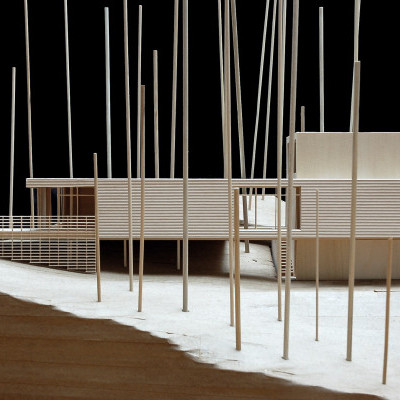
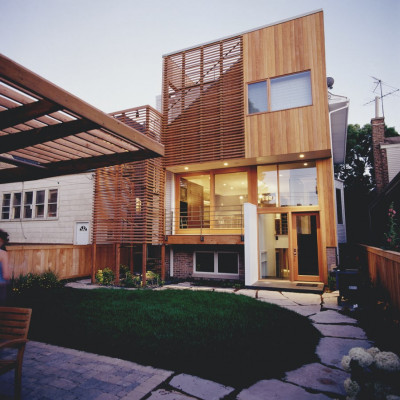
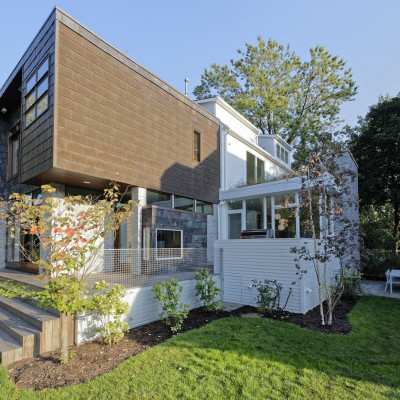
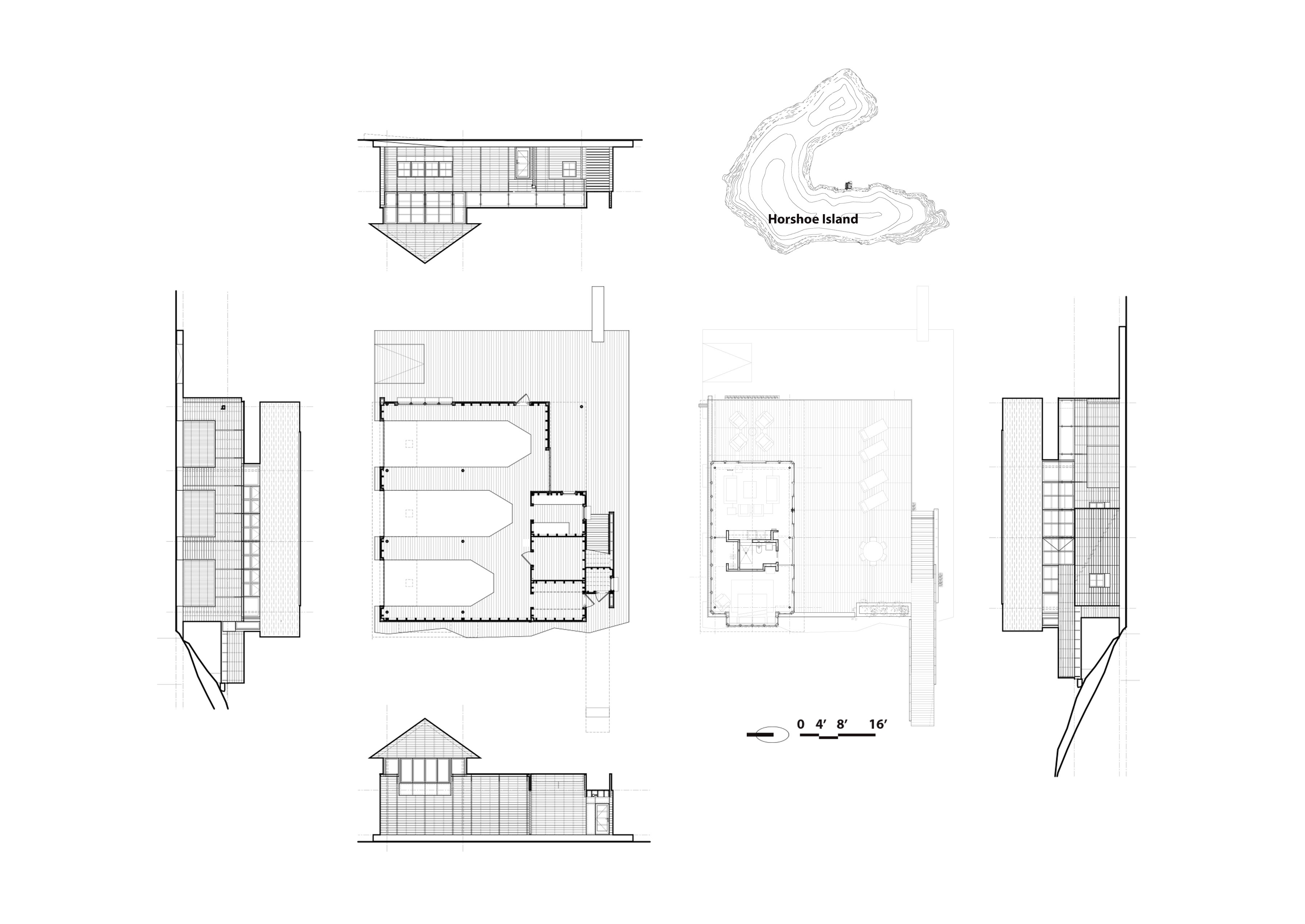
With an existing cottage on Horseshoe Island in Lake Muskoka, Ontario, the client for this project asked us to design a three-slip boathouse on the water with small living accommodations above. This typology is prevalent on the lake, as the rocky shoreline makes it difficult to remove boats from the water. The historical solution has been to construct private “boat garages” on the water, and to pair the garage with living, entertaining, and sleeping spaces above, resulting in a kind of boat-coach house. We used modern finishes and creative architectural solutions to deliver a contemporary version of the vernacular Lake Muskoka boat house.
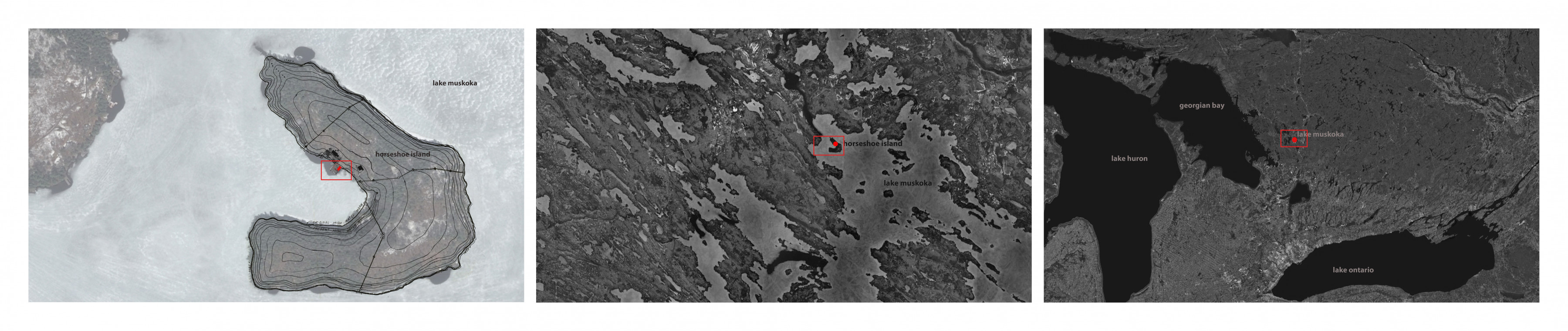
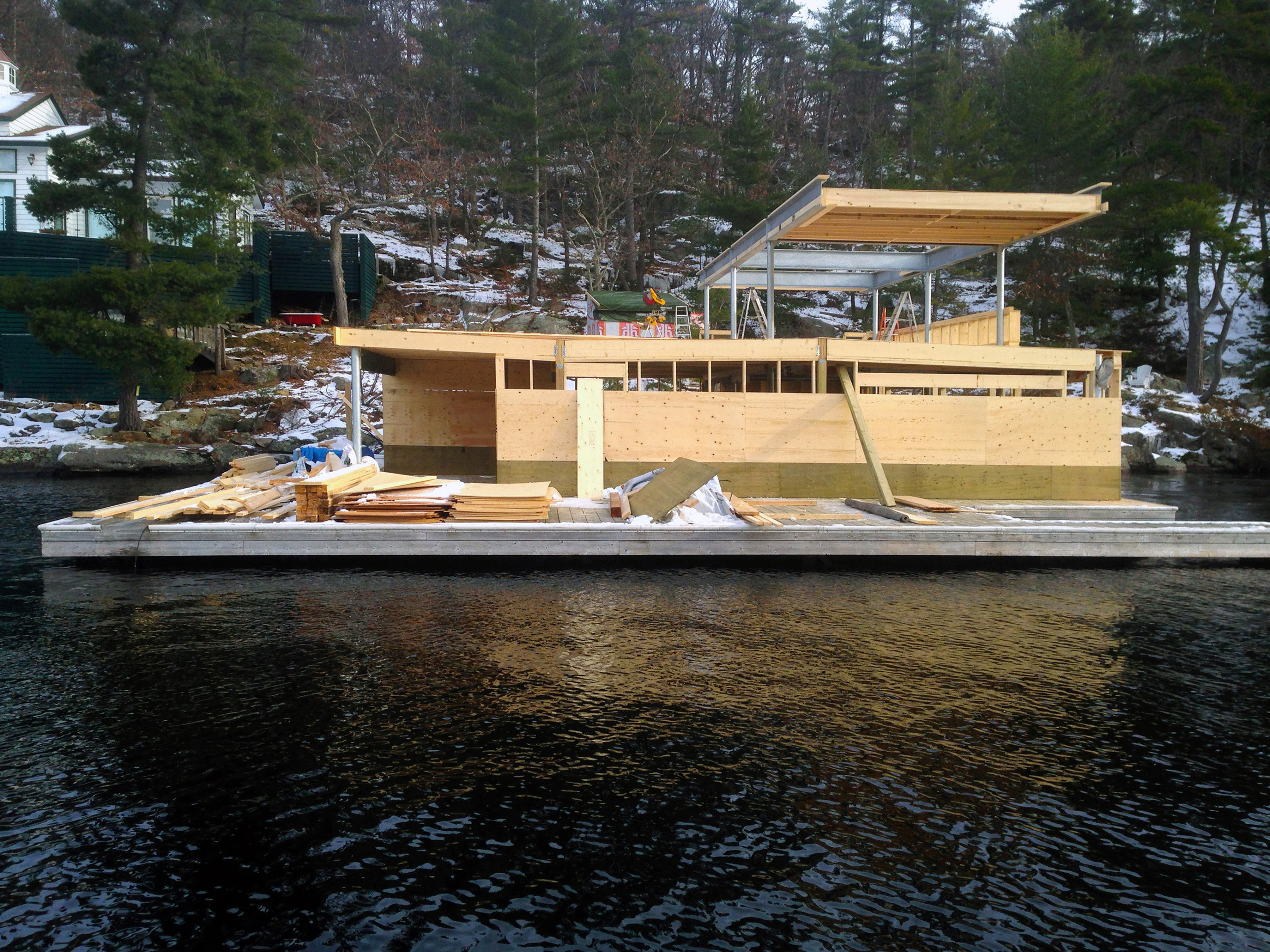
The project site, located on a 5-acre wooded parcel on an island in the middle of a lake two hours north of Toronto, presented some challenges to the building team. The first, driving the steel pilings into the bedrock just to support the deck and structure above, took an entire summer. The steel columns were boated in and a floating crane was used to set the steel. Construction took place during the winter months, after the lake was frozen solid enough to support snowmobiles, which pulled sleds full of lumber and building materials to the construction site.
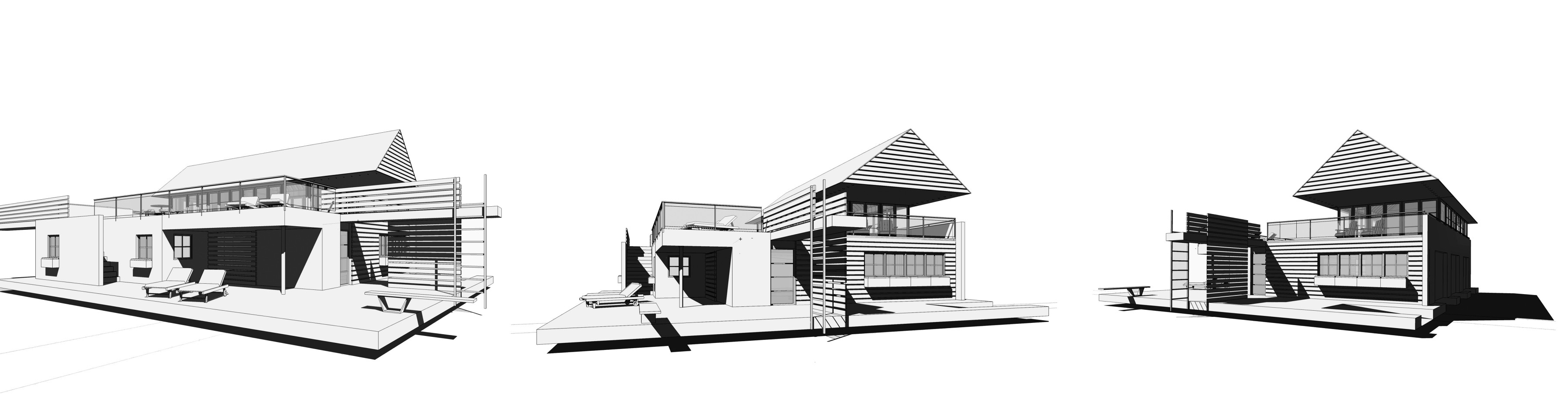
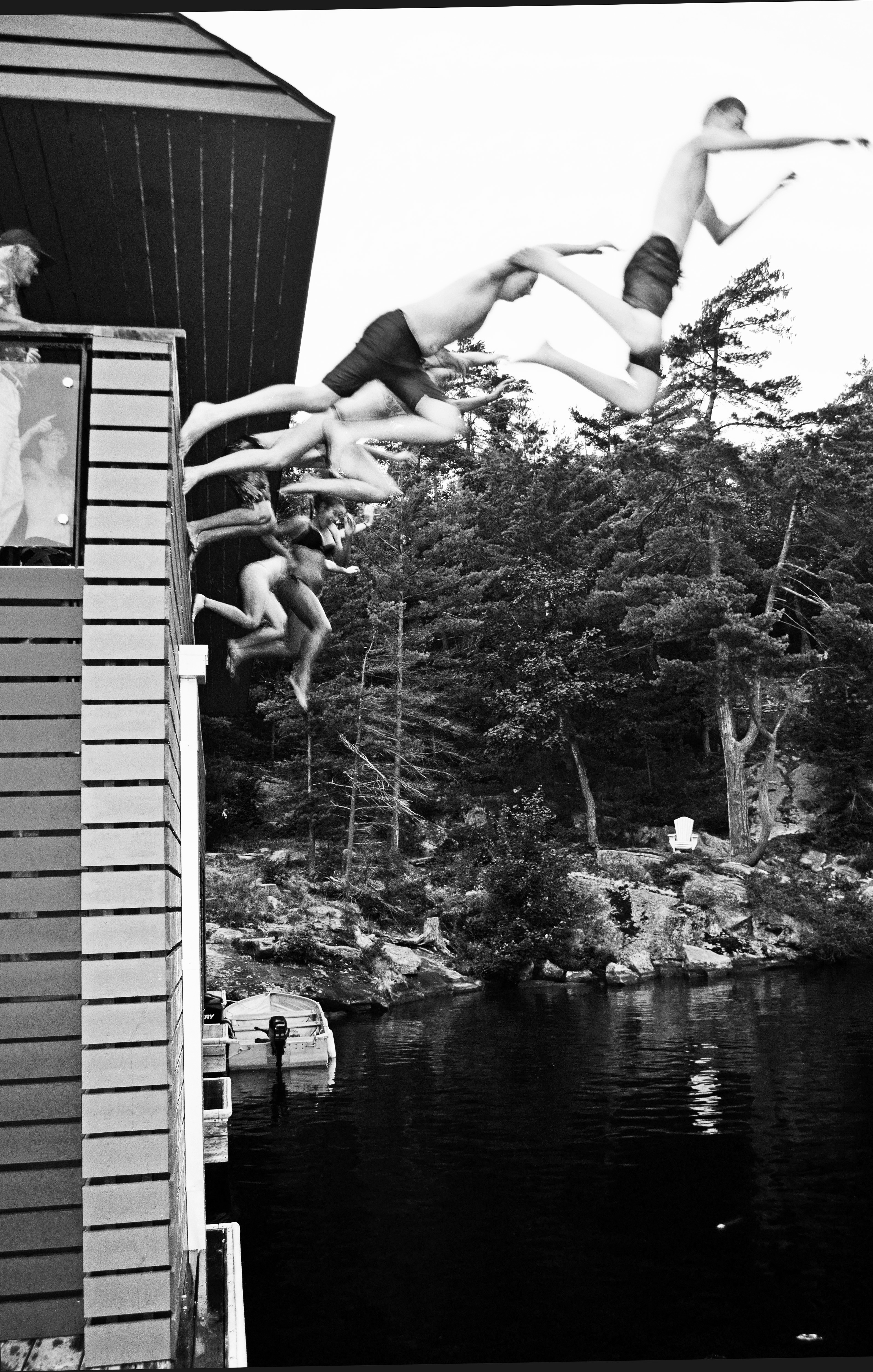
The original proposal included a diving platform and a springboard, but those features were postponed for a future phase.

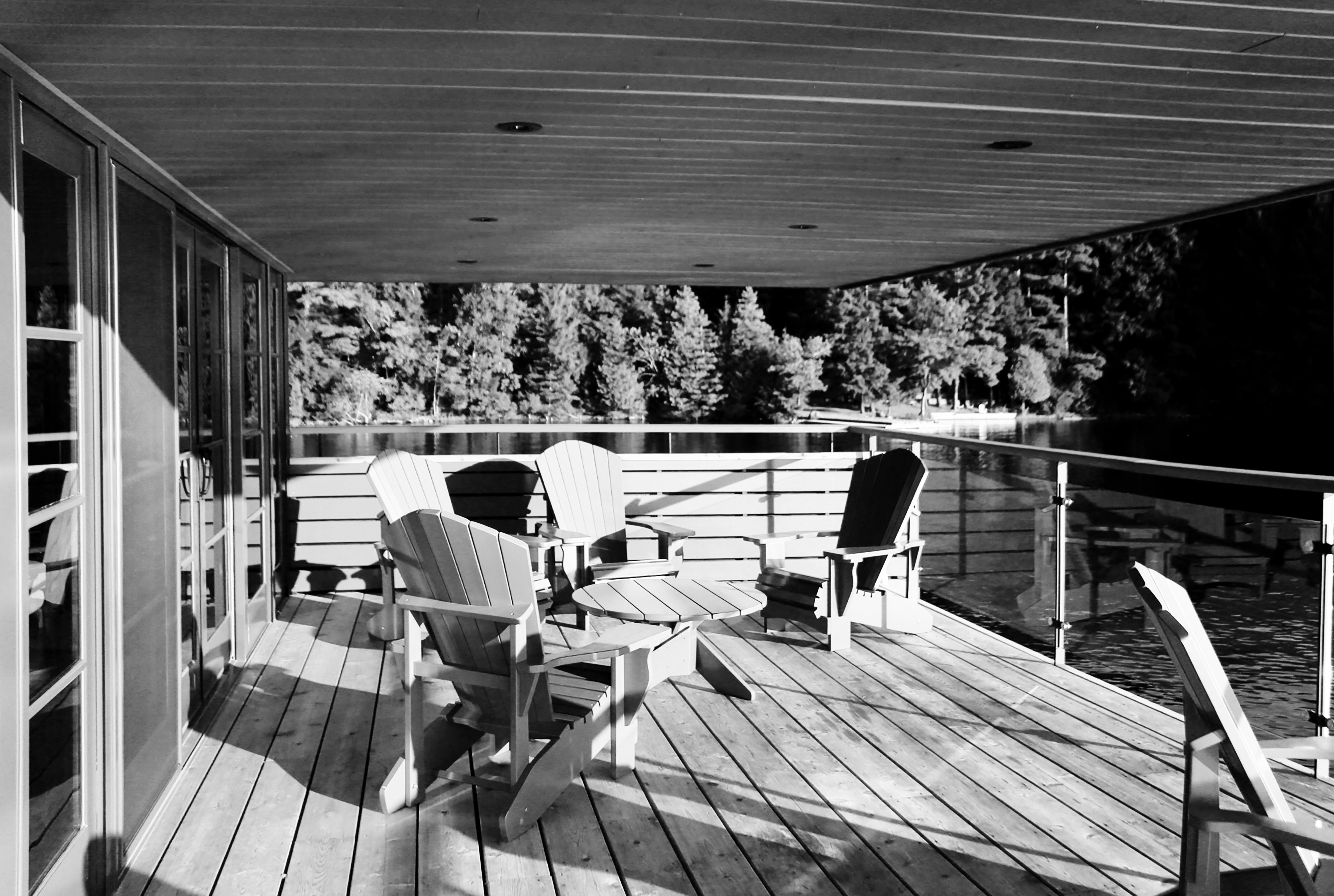
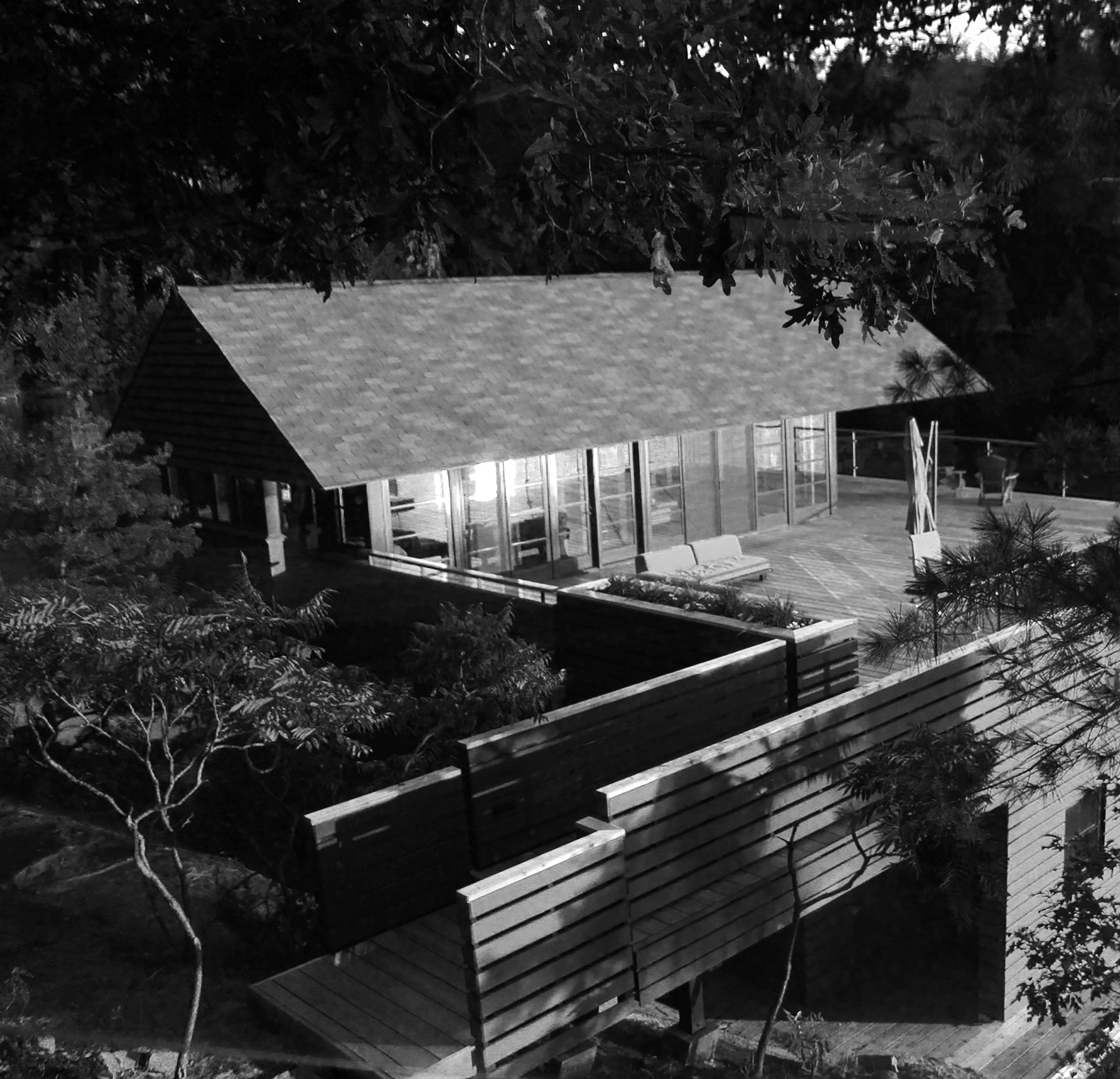
Our design reinterpreted and abstracted the elements of the traditional gabled Muskoka boathouse, modernizing it by cantilevering the gable roof to create a 15’ unsupported overhang, a continuous band of windows and doors, and an exposed steel structure.

We successfully provided enclosure for three boat slips, adequate deck space for access to the water, and a second-floor enclosed space comprised of a living area, bathroom, bedroom, and small kitchenette. What is not apparent is the structural steel pilings extending to the granite lake bottom.

A steel pier system extends from the dock down to the granite lake bottom, approximately 60 feet below water level at the deepest point.
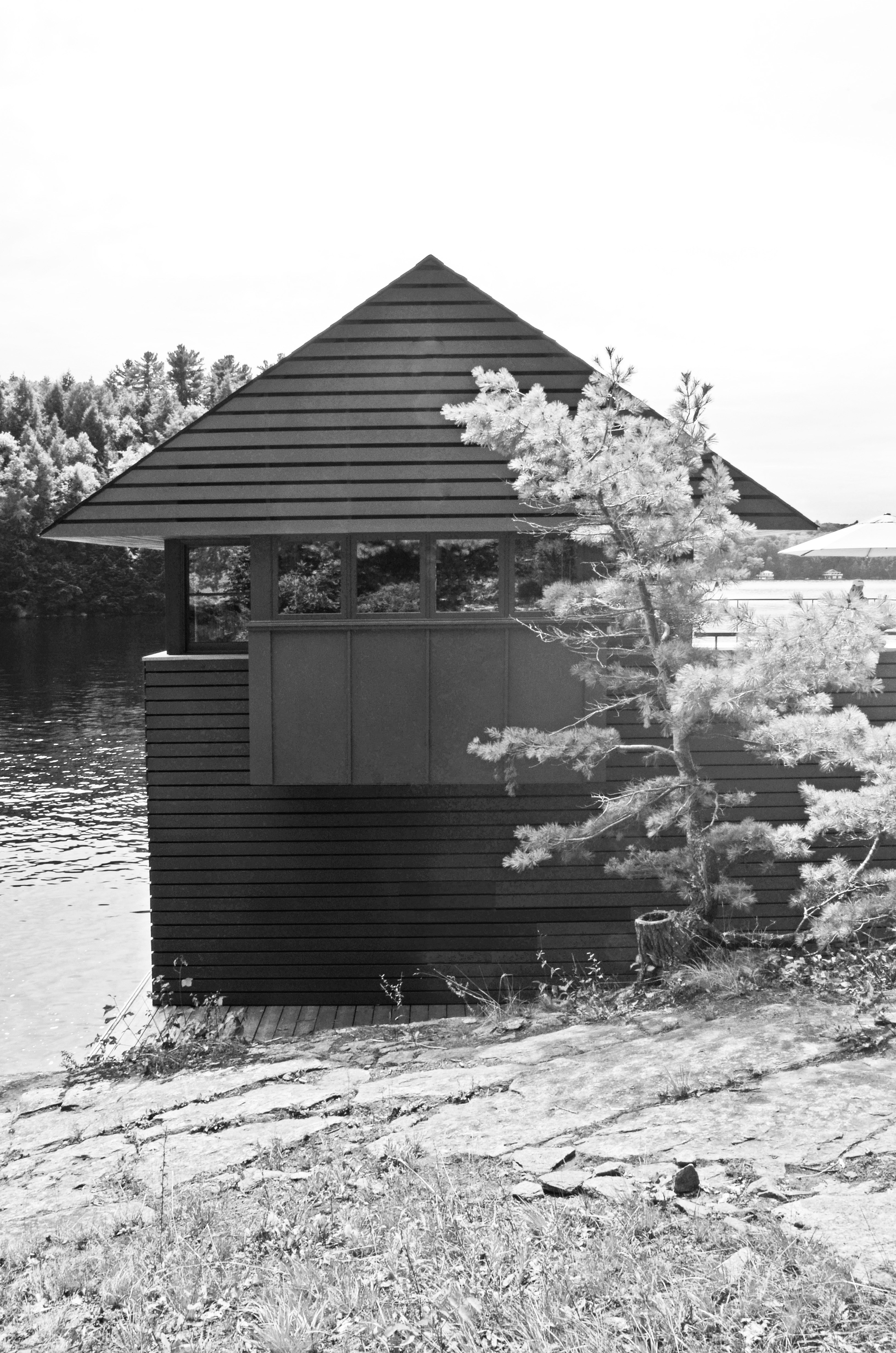
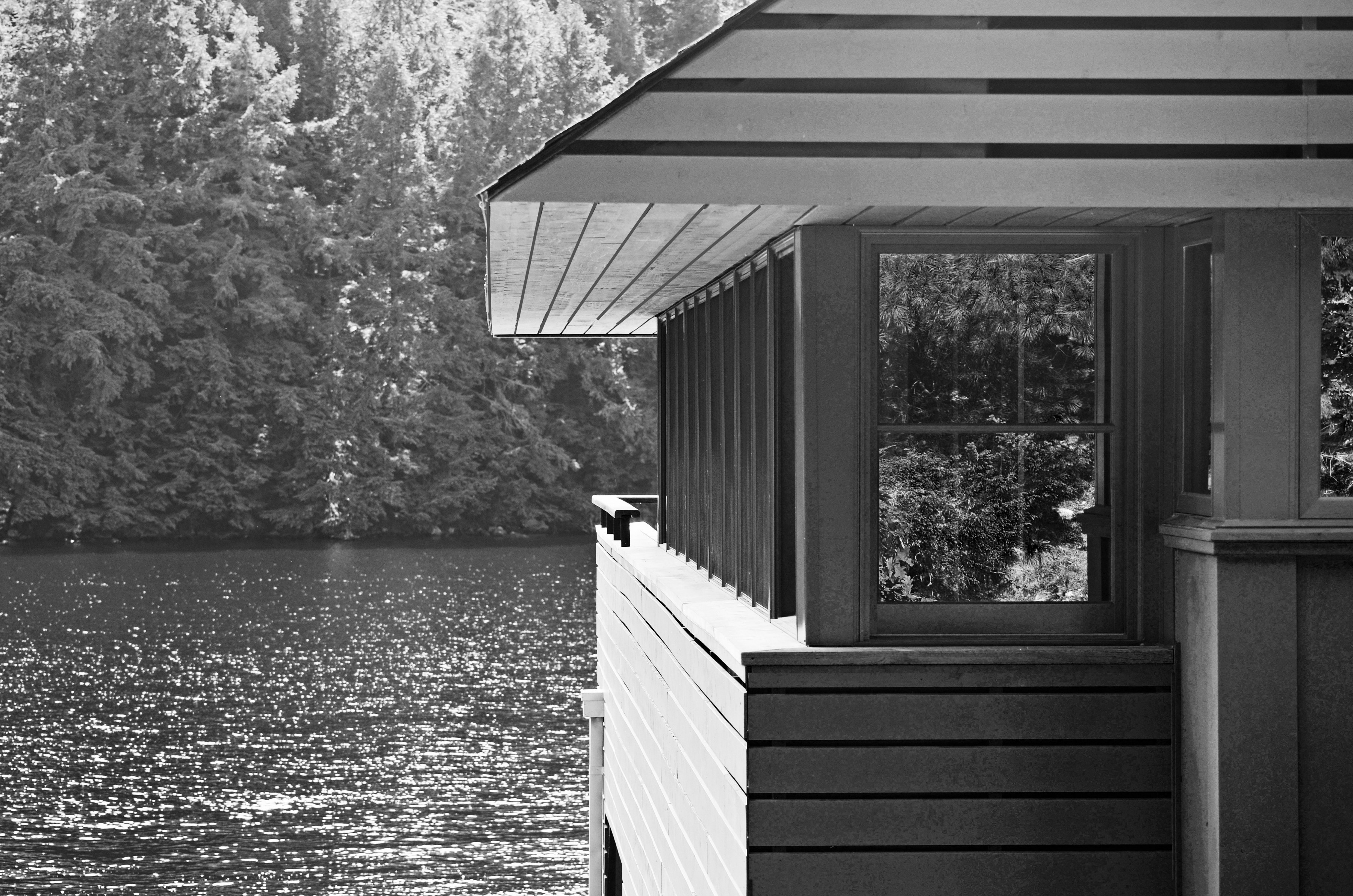
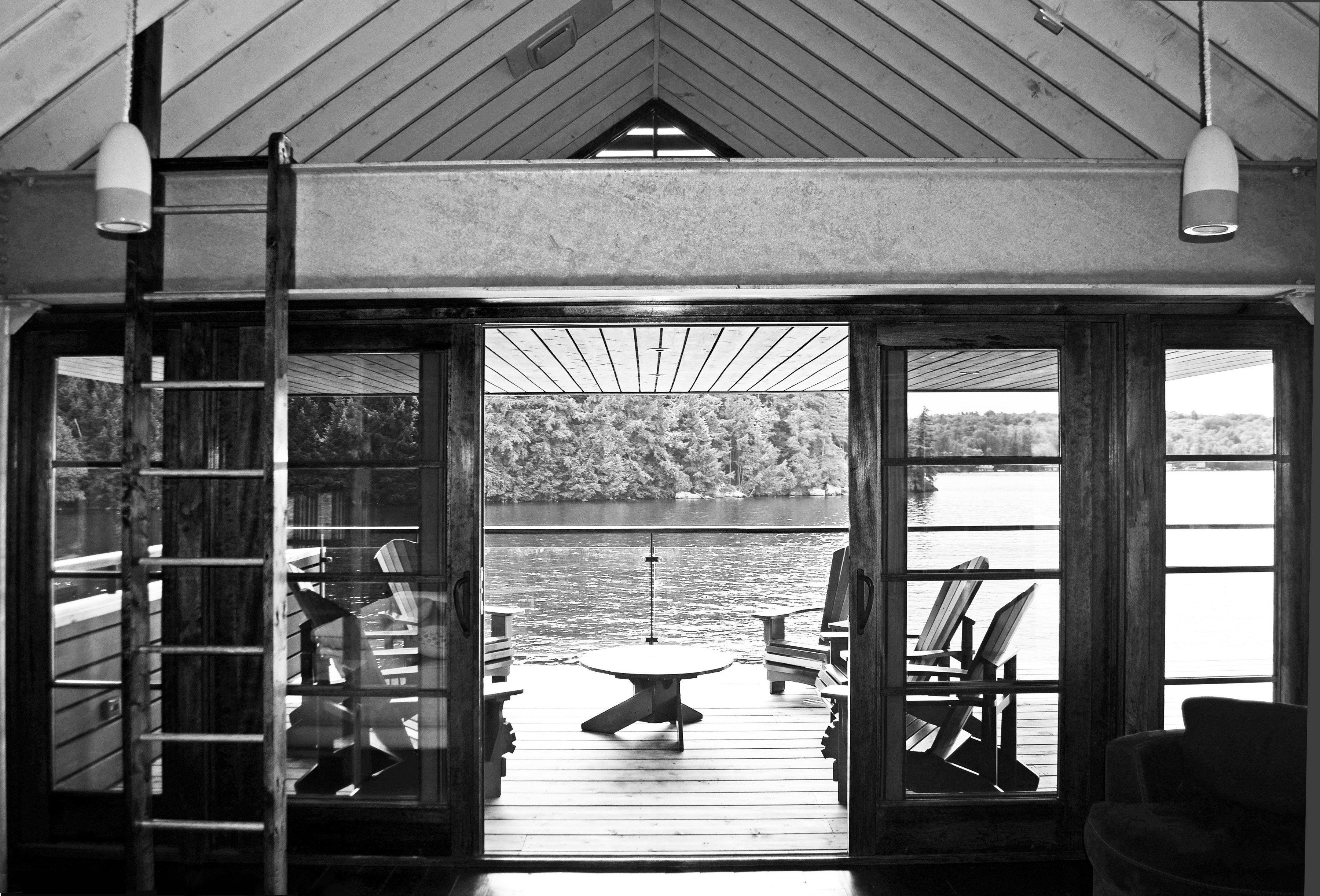
All interior finishes are natural — from the wood windows, to the pine paneling, to the exposed steel structure. Whitewashed ceiling joists, also left exposed, suggest the vernacular boat structures commonly found around the lake. A sleeping loft nests above the flat ceiling of the cantilevered gable facing the lake.