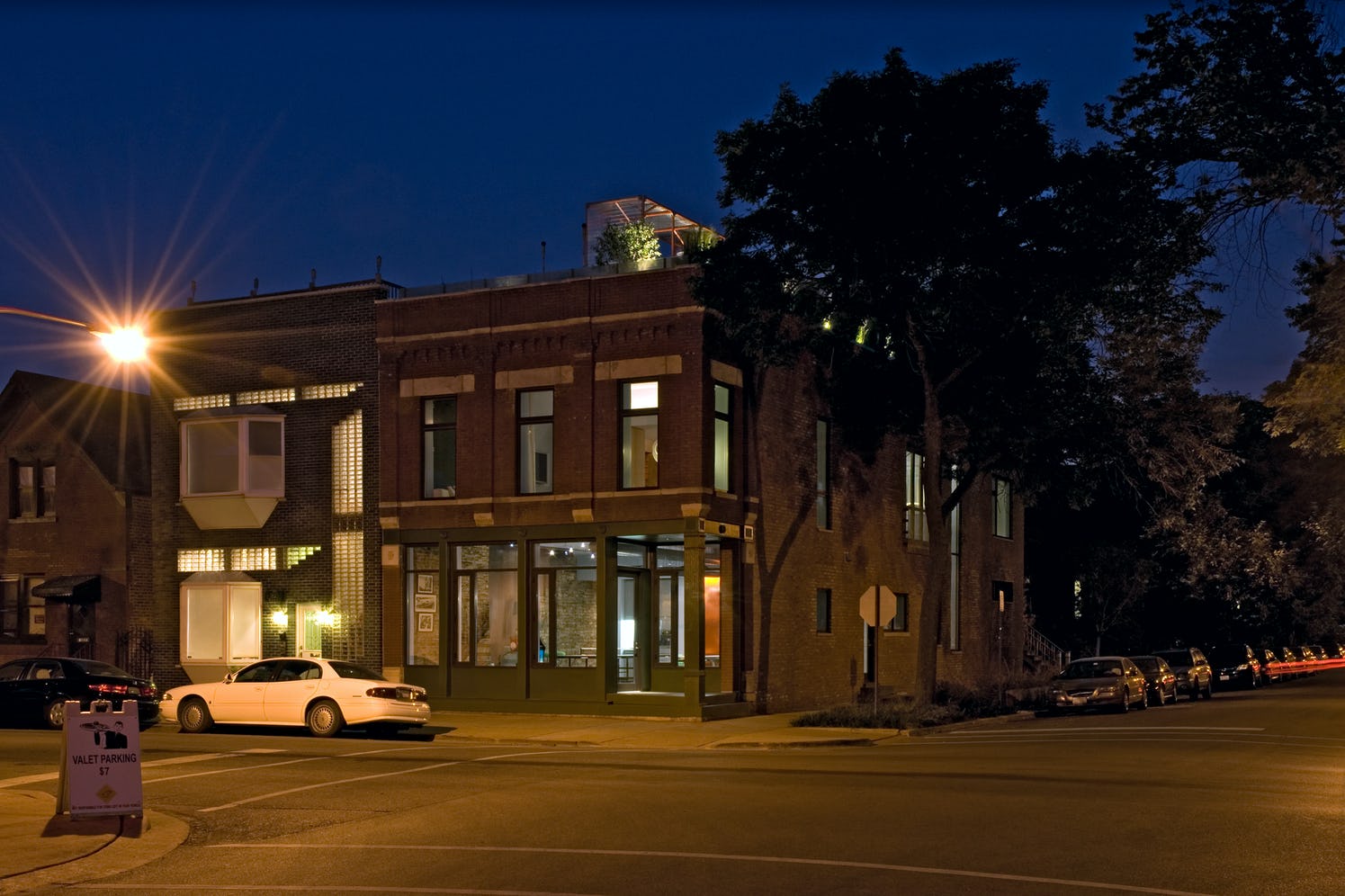
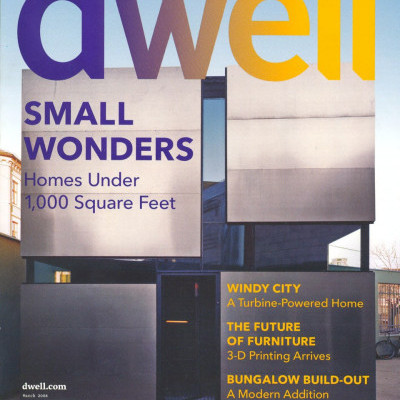
For this project, we undertook converting a former tavern into a live-work space for a husband and wife and their record label business. The major objectives were to design for maximum energy conservation, as well as to generate energy on-site. Our goal was to combine alternative technologies and a sophisticated palette of new and reclaimed materials to co-exist in architectural harmony. This strategy also helped achieve the environmental goals of the project.
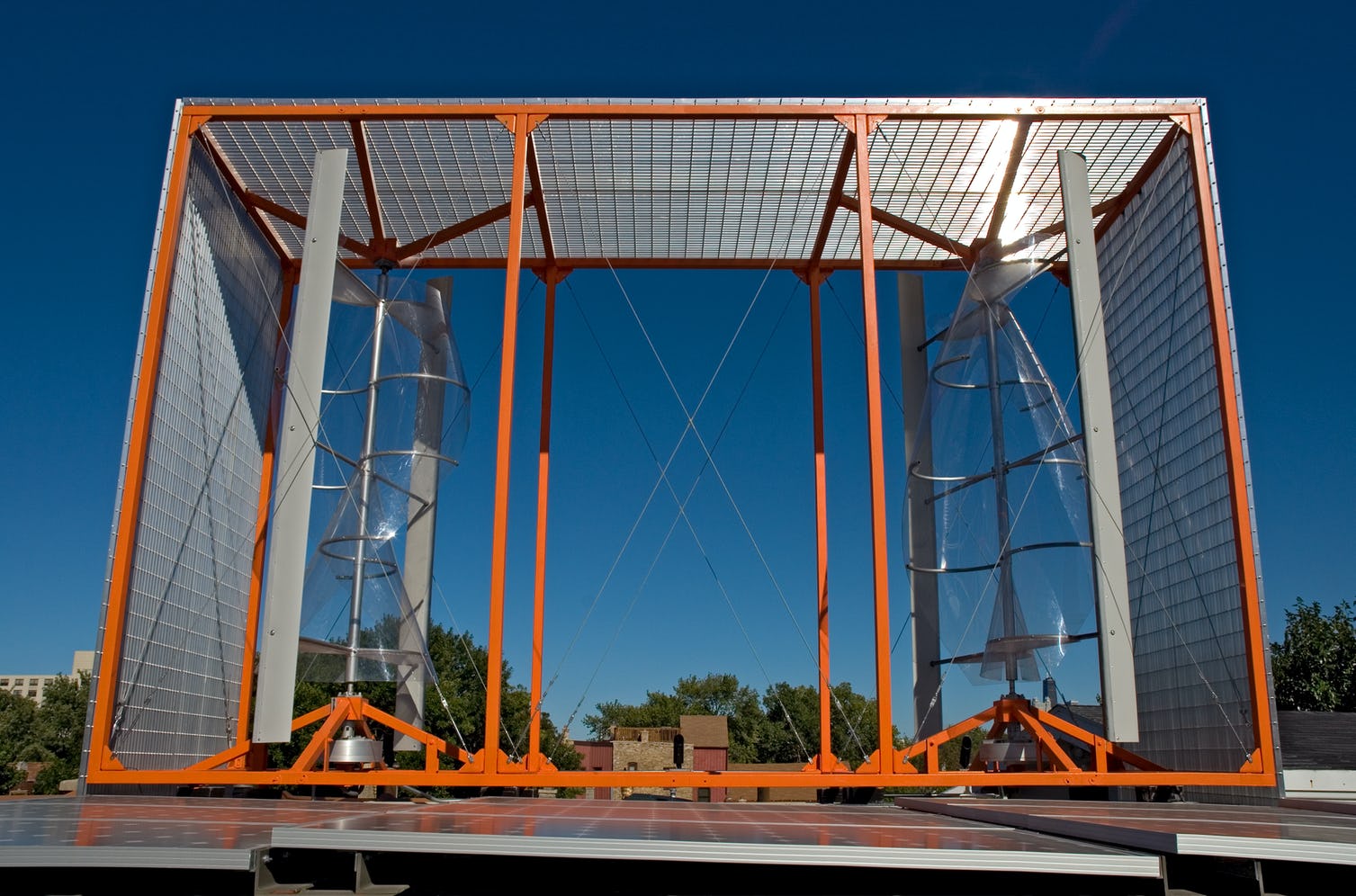
The building saves energy with Energy Star appliances, natural daylighting, geothermal heating and cooling, soy spray foam insulation, and a green roof. It saves material by recycling 80% of the material removed from the original building, reclaiming structural timber for use as architectural features, and building with recycled materials such as drywall with 99% recycled content and terrazzo flooring with recycled glass content. The building generates 50% of its total energy consumption on site with two vertical axis wind turbines and thirty rooftop photovoltaic panels.
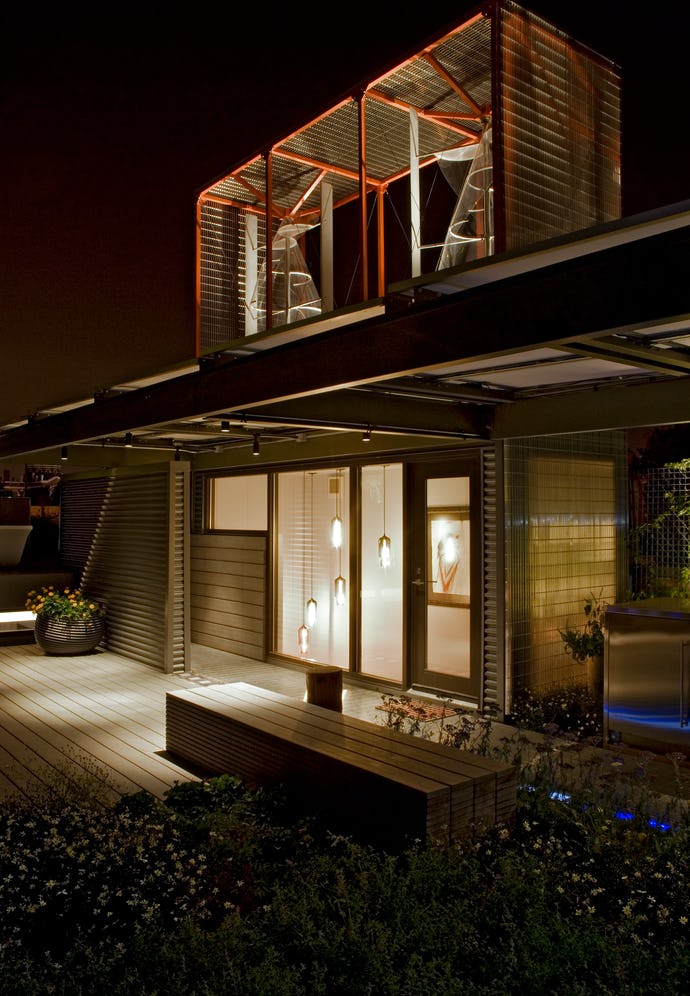
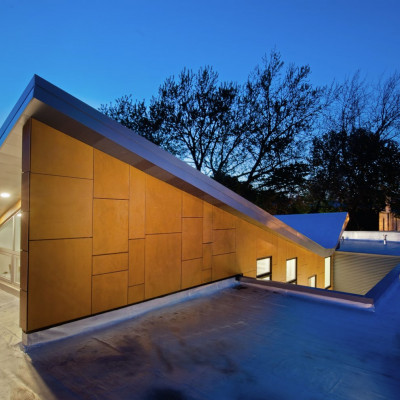
Vertical axis wind turbines placed above the rooftop penthouse contribute to the building's energy supply.
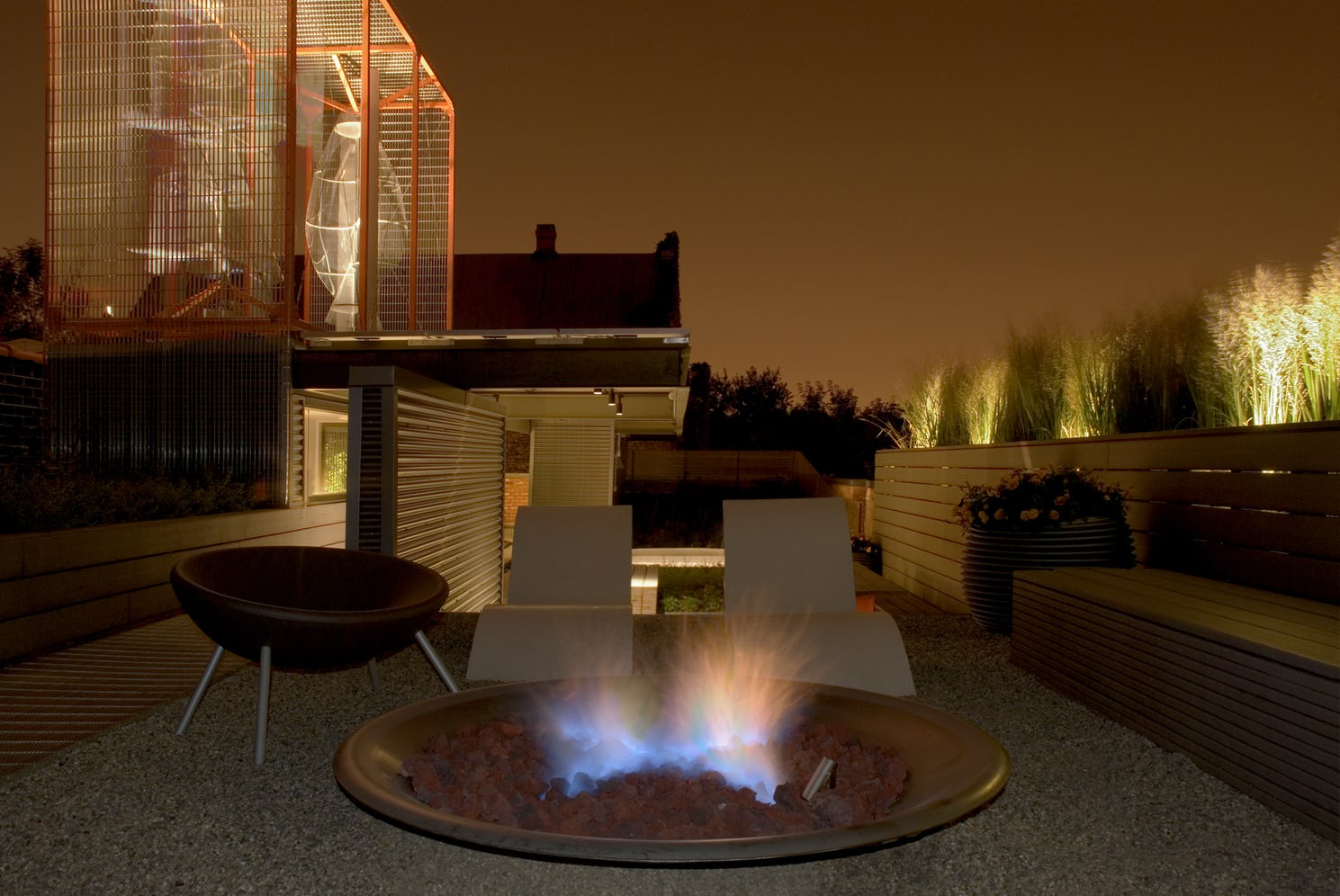
The existing building occupies the entire lot, with no setbacks on any side. Therefore, outdoor space was created in the only available location: the roof.
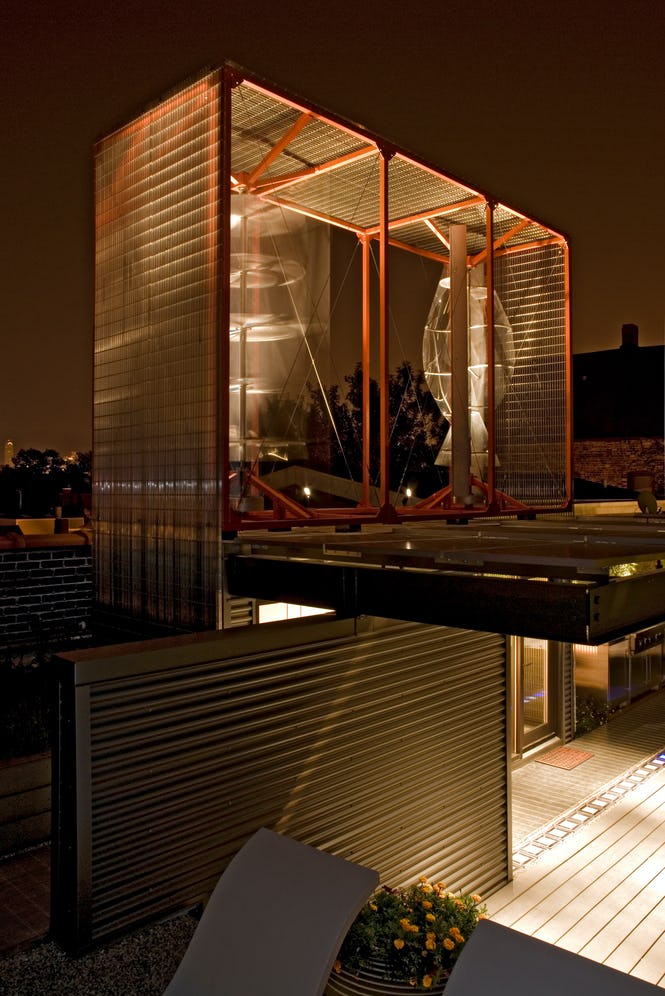
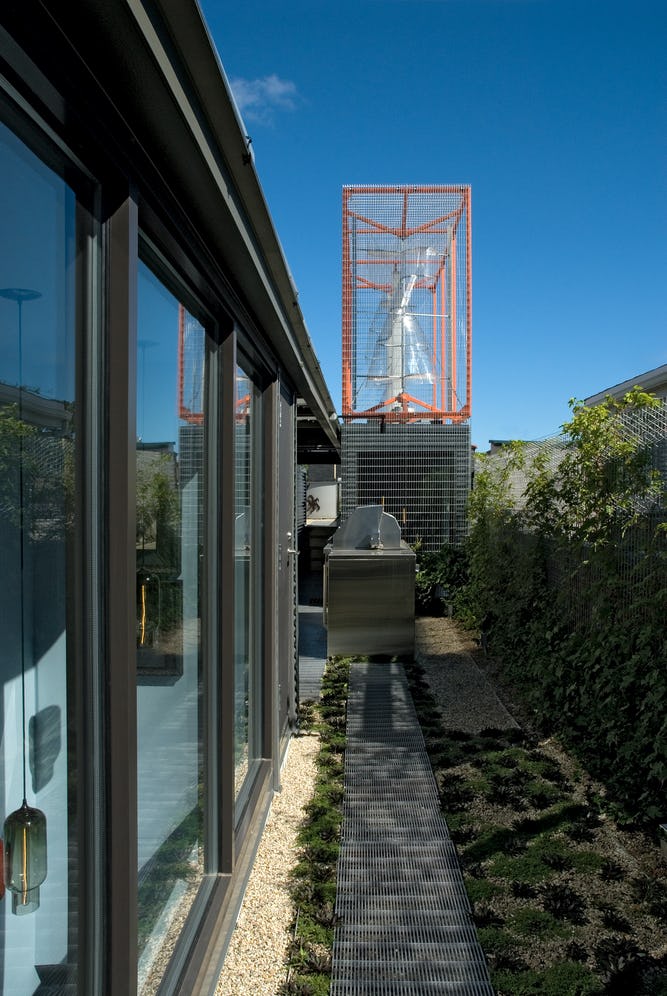
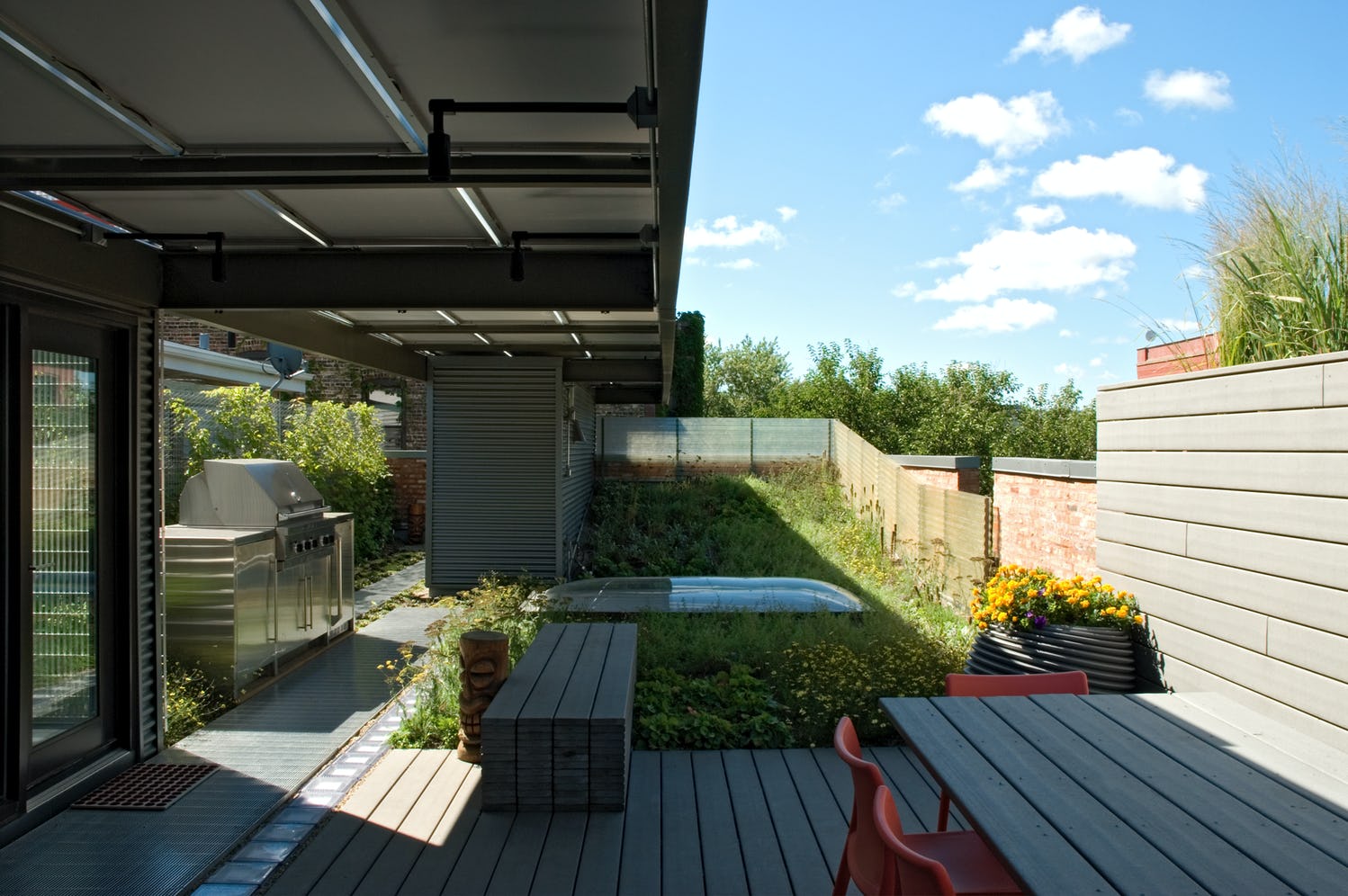
A carefully designed canopy provides shade to the roof deck, while creating a framework for the support of photovoltaic panels, which generate a good portion of the building's electricity.
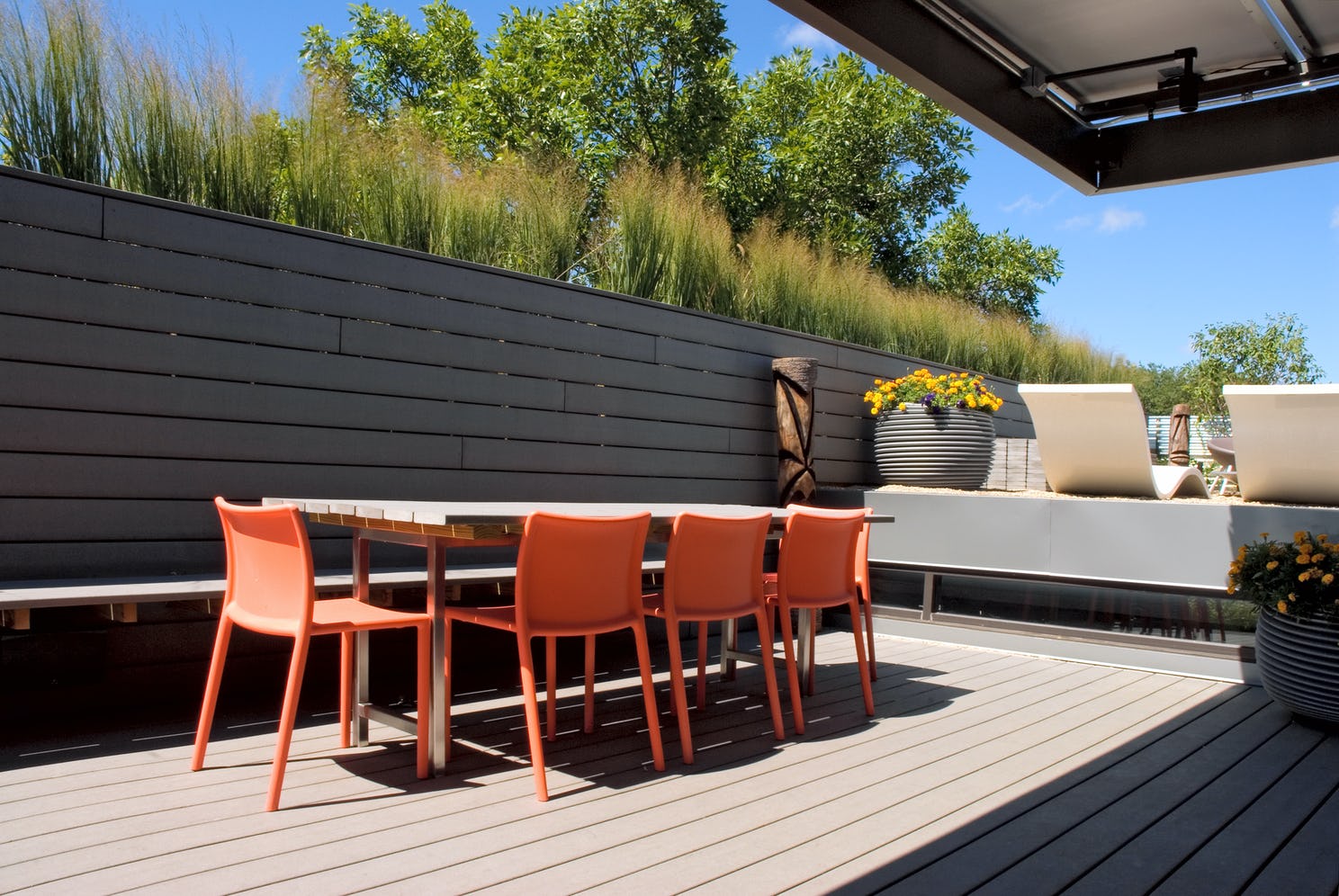
Trex decking is composed of recycled milk cartons and sawdust.
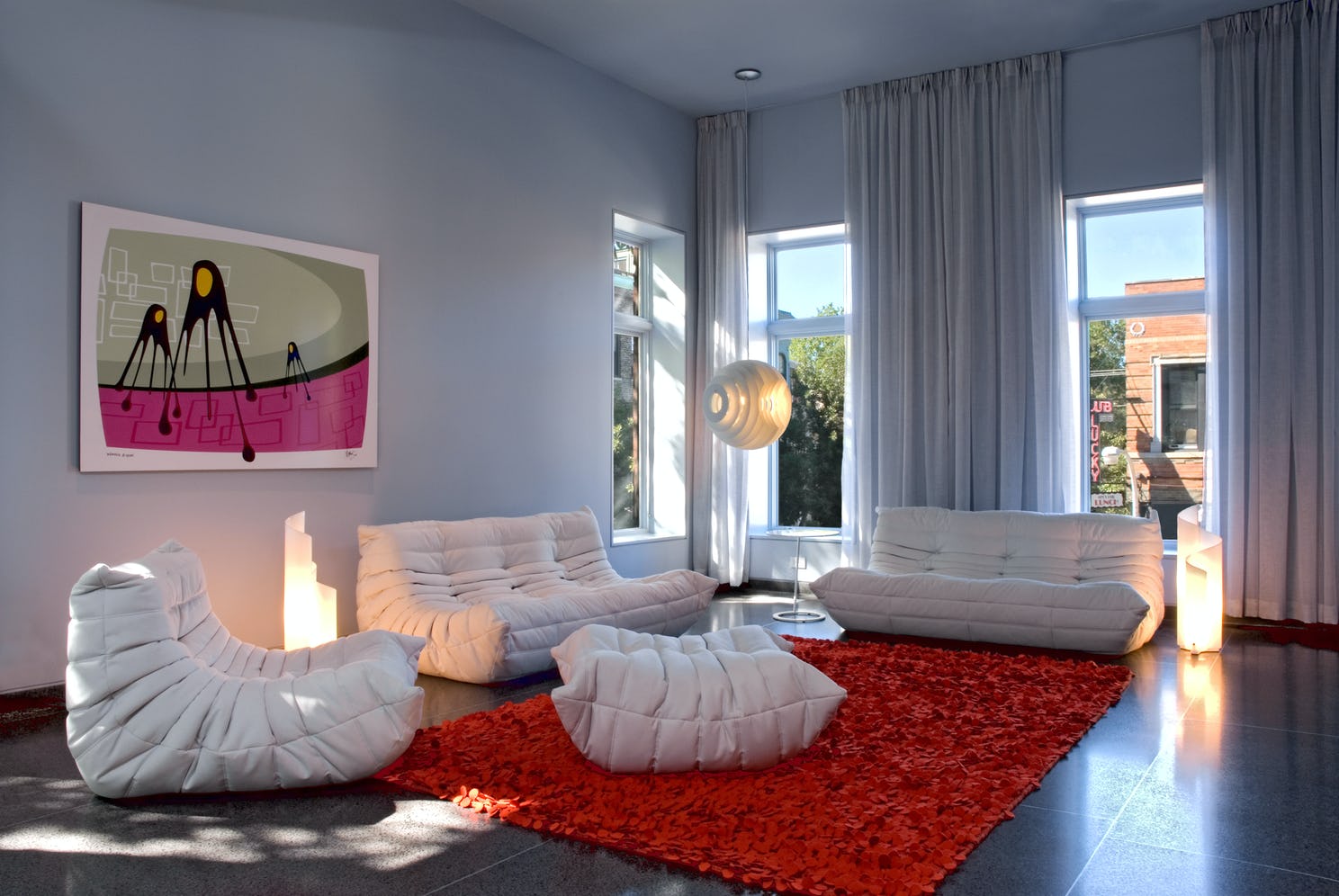
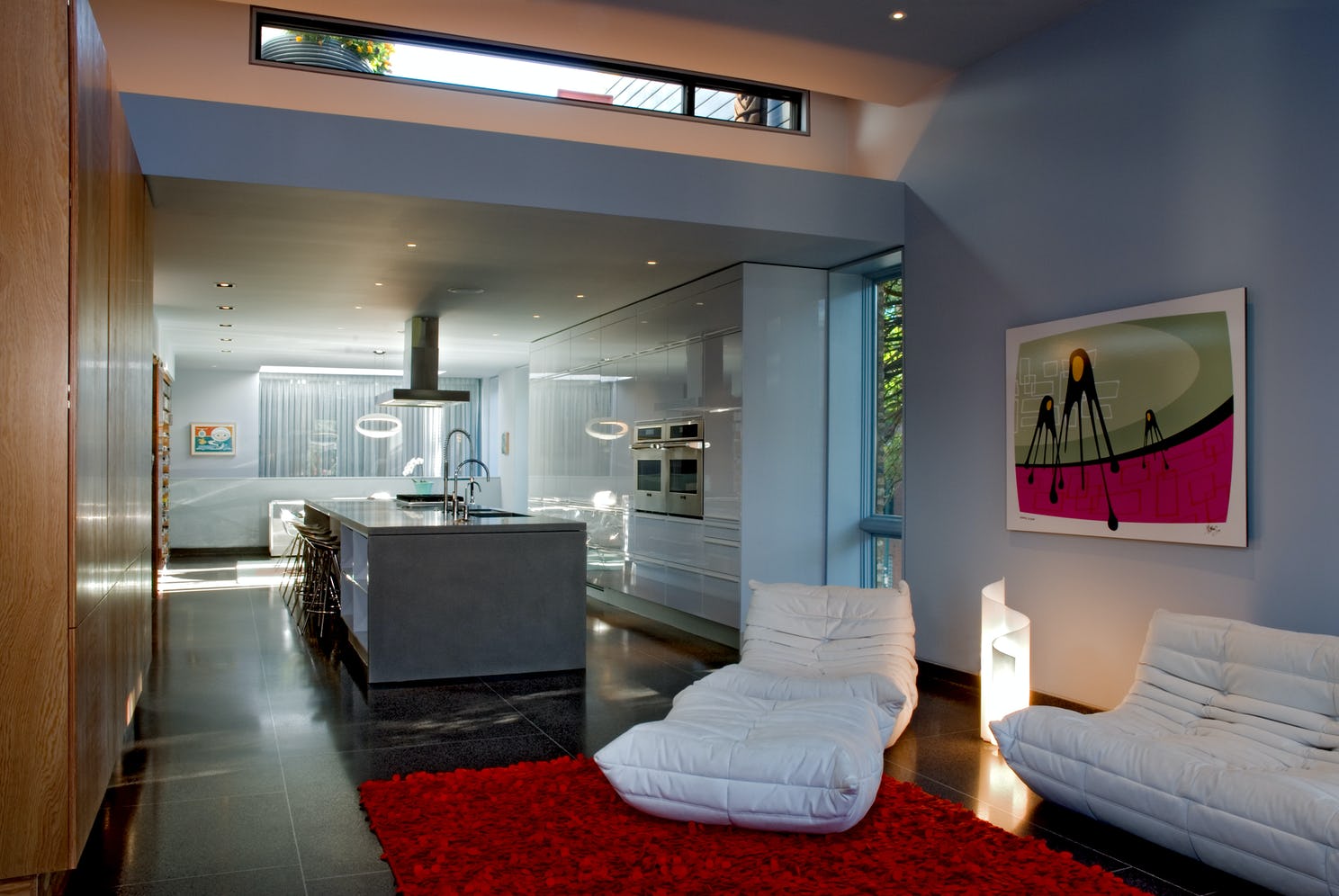
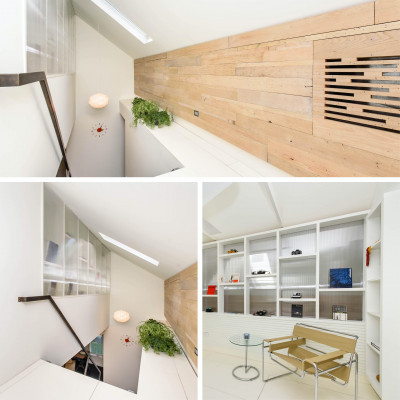
The open living/dining space on the second floor was designed to maximize natural light through the use of skylights and clerestory windows.
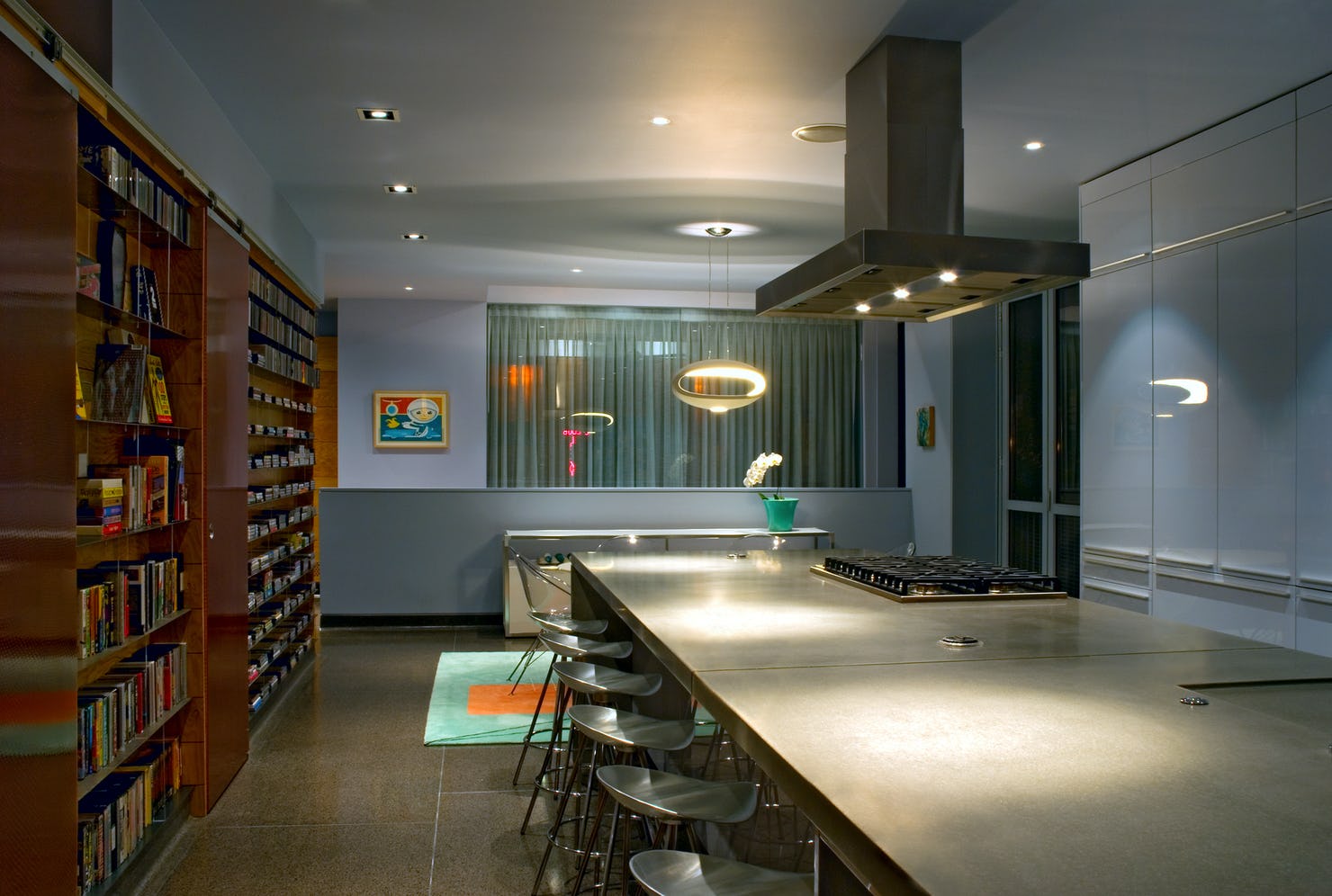
Concrete countertops and terrazzo floors establish the cool gray color palette that continues with the light blue wall color used throughout.
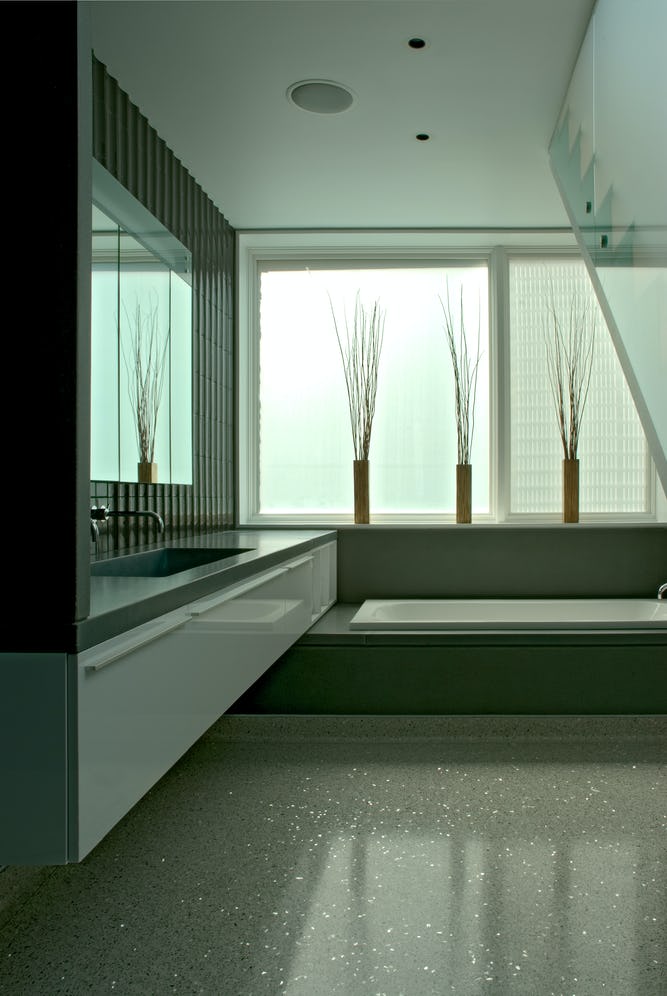
Master bathroom tub and vanity composition
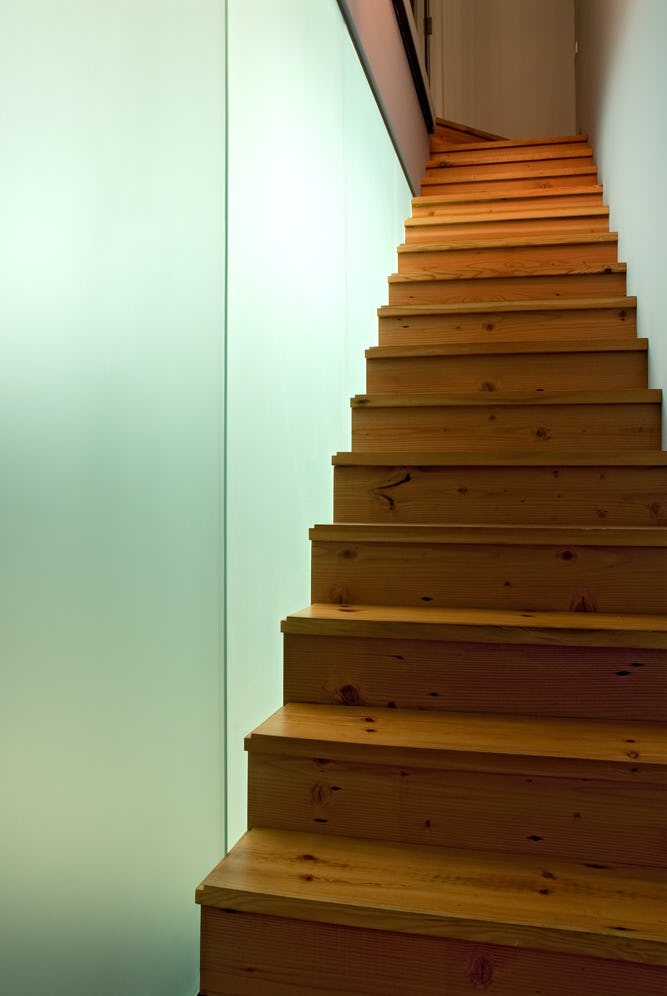
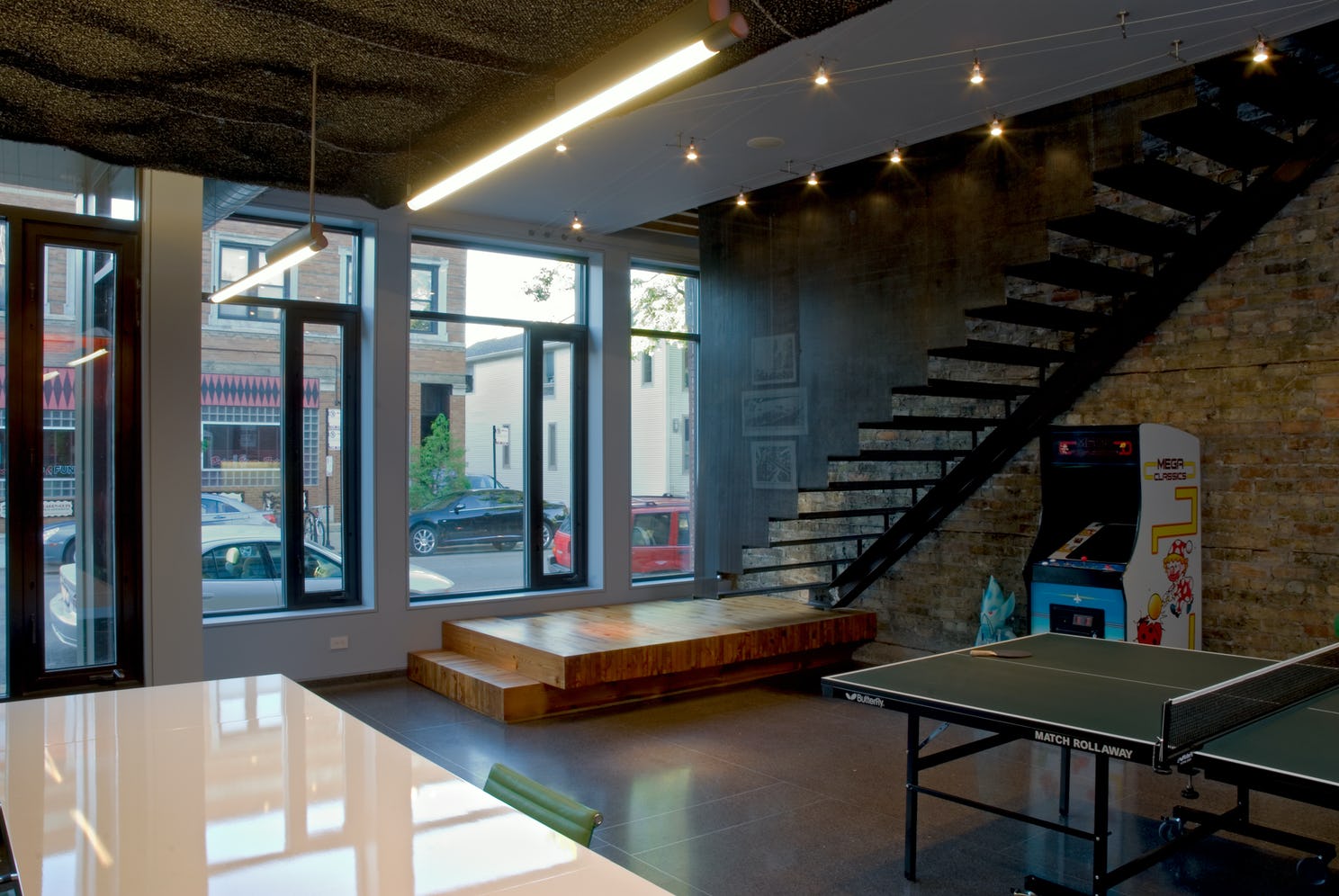
Recycled floor and roof joists were used throughout at stair locations, saving waste and creating a theme across the house.
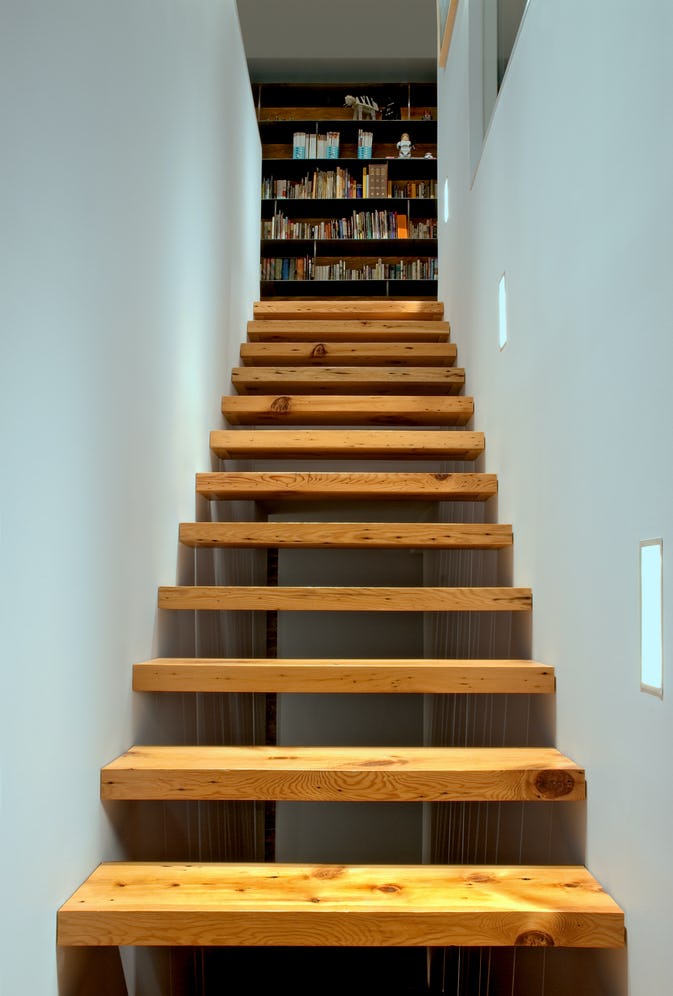
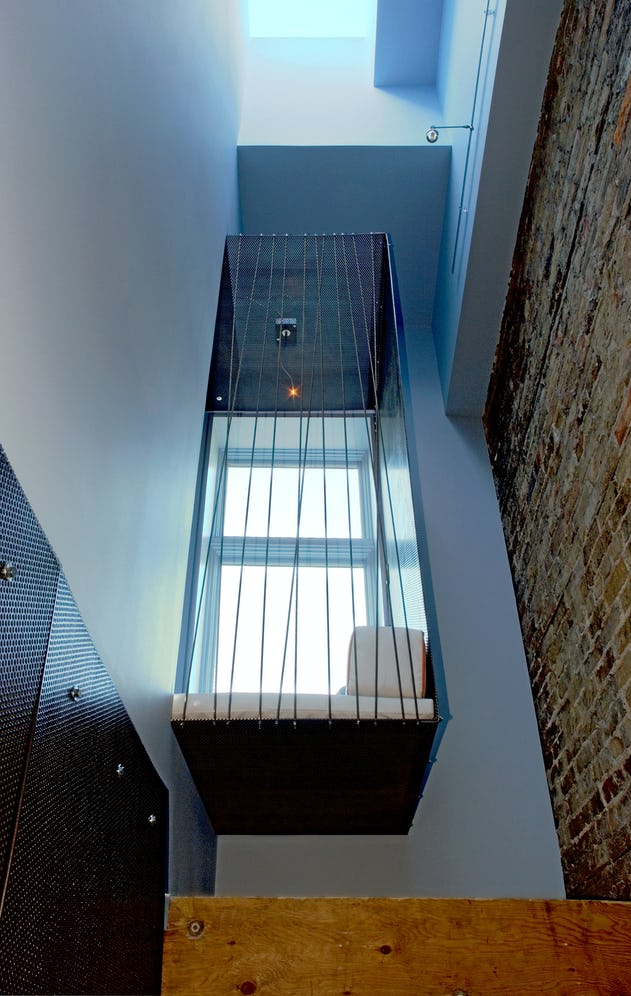
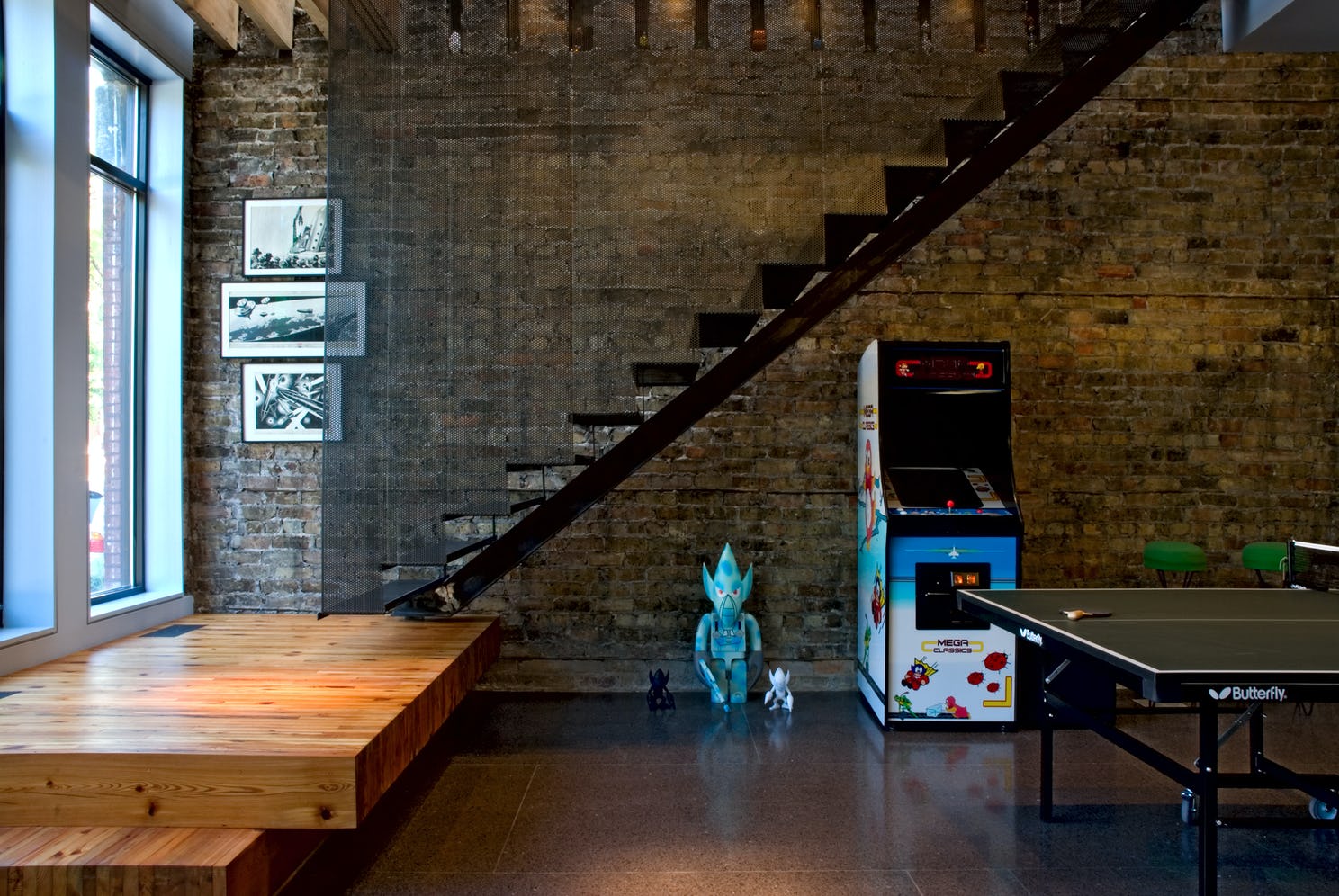
A structural steel perforated mesh supports one side of the floating stair leading to the second floor living space. The wood landing is made of reclaimed roof joists.